Empty-nest transition and changing family roles
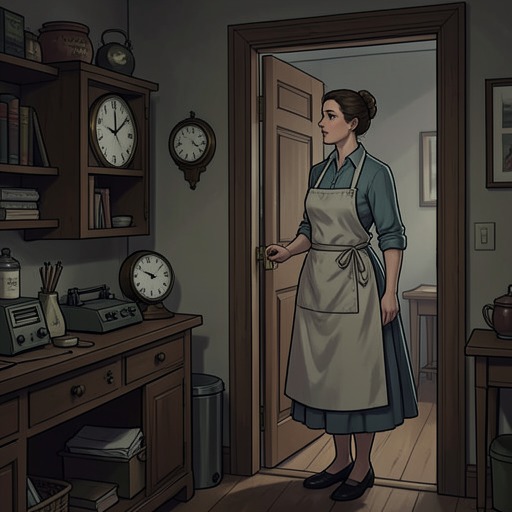
Never Kiss a Man in a Christmas JumperEmpty-nest transition and changing family roles describe the shift in Maggie O’Donnell’s household from a life centered on raising Ellen and supporting Paddy O’Donnell toward a less predictable stage in which both have independent plans. The change is emotionally difficult not because Maggie doubts that Ellen should grow up, but because the routines and relationships that gave her life its shape are receding faster than she feels prepared for.
A life organized around care
Maggie’s awareness of this transition is set against a history in which responsibility arrived early and became central to her identity. She lost her mother at fourteen and became pregnant not long afterward. Choosing to keep her baby meant abandoning her hope of going to university; the birth and subsequent surgery were traumatic, and the years that followed could be difficult. The account presents these circumstances as parts of a life Maggie nevertheless managed to build, rather than as a complete definition of her.
She raised Ellen, made a living from a hobby, and worked to keep the two of them fed, housed, and happy, mostly on her own. She also looked after her father when he needed her. Maggie takes pride in having become independent, smart, and strong, and in having given Ellen what she could wish for. Those achievements make the changing family arrangement more complicated: the care that once demanded so much of her has succeeded in making Ellen capable of leaving its center.
The park as a family archive
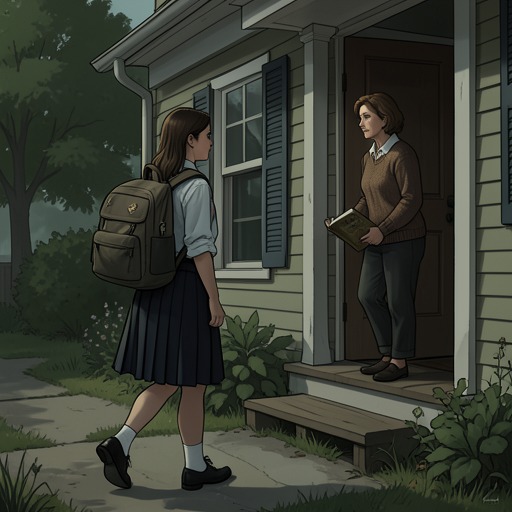
A park ten minutes from their home in Jericho gives Maggie a physical measure of that change. Looking across it toward the distant, hazy spires of Oxford, she remembers coming there first as a child with her own mother, and later as a teenager. Her recollections then move forward through the stages of her life with Ellen: walking there with a baby in a pram, bringing Ellen as a toddler and little girl, and now seeing her as almost an adult.
The park has altered in small ways: the swings have been painted and the benches replaced. Yet its familiar setting makes the passage of family time feel unusually visible. Maggie associates the trees and children’s voices with past Christmases and with the years when Ellen’s childhood filled the present. She thinks of those days, when a parent is at the center of a child’s life, as precious in a way that becomes clear only after they are gone. The park’s continuity therefore sharpens rather than softens the contrast between the little girl Maggie remembers and the young woman now making her own choices.
Independence and loneliness
The household’s changing rhythms become harder for Maggie to dismiss when she considers the people around her. Paddy O’Donnell has moved beyond a darker period in his life and now enjoys an active social circle; Ellen is beginning to make a life of her own. Maggie understands this as the ordinary result of raising a child well: Ellen is meant to become confident and capable enough to leave the nest. At the same time, Maggie recognizes that she was not ready for the emotional consequences of that success.
Ellen still lives at home to save money while studying medicine at Godwin College, but she spends many nights with friends or with her boyfriend. The difference between sharing a home and sharing a daily life is important to Maggie’s sense of loss. One evening of adult company with Marco Cavelli makes the isolation more legible to her: she has been working, watching television, and reading, finding those routines pleasant and safe, yet increasingly sad. At thirty-four, she fears she has accepted a diminished future too readily. The realization is not simply that the house is quieter; it is that the roles and habits around which she organized her life no longer guarantee companionship or purpose.
Her family’s response to her decision to care for Marco also exposes how others see her circumstances. Their support suggests that they regard her as lonely and with little to occupy her beyond work and family. Maggie finds that assessment unpleasant partly because she suspects it may be accurate. Caring for Marco offers an immediate responsibility and a way to keep busy, but the larger change remains: she must face the space left as Ellen and Paddy O’Donnell become less dependent on her.
Christmas as a test of change
Christmas concentrates the shift into a question of who will be at home and who will make plans elsewhere. Ellen tells Maggie that her boyfriend’s family is going to Paris for the holidays and has invited her to join them. Maggie’s first instinct is to refuse, but she recognizes that Ellen will soon be nineteen, is already strong-minded and independent, and is more grown-up than Maggie herself was when she became a mother. She also understands that she cannot fairly deny Ellen an experience simply because she fears being left behind.
The conversation unsettles Maggie in part because a first edition she had considered giving Ellen no longer seems to answer the moment. She had already wondered whether Ellen would want the book at all, or prefer cash, and whether she was holding on to an image of a little girl who had grown into someone else. The gift question thus echoes the larger transition: Maggie is trying to respond to the person Ellen is becoming rather than preserve the child she remembers. She postpones a fuller answer until the next day, keeping her immediate reaction restrained.
Paddy O’Donnell’s possible absence makes the holiday feel still less secure. He tells Maggie that a friend has offered him a last-minute cabin on a cruise to the Canary Islands. Maggie listens while looking toward Marco and comes to see the plan as another departure from the family’s usual Christmas together. She says the trip sounds lovely while concealing her disappointment, then hears Paddy ask whether Ellen will be there. The exchange leaves the holiday arrangement unresolved, but makes clear how quickly Maggie’s expectation of a shared family Christmas can be unsettled by the independent choices of the people she loves.
Significance
The transition is presented as both a success and a loss. Maggie’s effort to raise Ellen as capable and self-sufficient has worked; the resulting independence is exactly what a parent hopes to foster. Yet that outcome also removes the daily centrality on which Maggie’s sense of usefulness has rested. Her memories of the park, her doubts about the Christmas gift, and her reaction to Paddy O’Donnell’s travel plan give the change distinct forms: recollection, a struggle to recognize Ellen’s present identity, and the prospect of an altered family ritual.
Maggie’s situation is therefore not a simple rejection of independence or a wish to hold Ellen back. She understands that Ellen should have experiences beyond home, and that Paddy O’Donnell may choose companionship and travel for himself. What she has to confront is her own unpreparedness for the life that follows successful caregiving. The possibility of looking after Marco brings a new demand into that unsettled period, but it does not erase the underlying question of how Maggie will define her days when being needed by her family is no longer their organizing principle.